
How Hawthorne Residents Are Found
A useful Hawthorne residents directory search separates ownership, occupancy, civic registration, court filings, and past residence. Those roles live in different systems. The Los Angeles County Assessor Portal is the best first stop when you hold an address or a parcel. The Registrar-Recorder/County Clerk, usually shortened to RR/CC, keeps recorded instruments, but its deed index is not a web search. Superior Court adds the courtroom layer by party name. Libraries and archives add the household layer.
Each result answers a narrow question. An assessor record ties assessment facts to an AIN, the Assessor Identification Number. A deed names a grantor or a grantee. A voter record belongs to one registered voter and sits behind purpose rules. A directory entry covers a single year. A match earns trust only when role, date, address, and name details all line up.
- Start with a known address, AIN, name, or historical year and write down the exact question.
- Use the county assessor or a court search for the record type that fits that question.
- Join the result to a second fact, such as a parcel, spouse, date, business, or case number.
- Use the RR/CC counter, a library reference desk, or a focused city request when no online index exists.
- Confirm important facts with the office that created or keeps the record.
The Hawthorne resident lookup page narrows the lens to one person. For a whole street, the by-address method fits better.
Hawthorne Resident Records Offices
Hawthorne is an incorporated city in southwestern Los Angeles County, so it is not a separate records jurisdiction. City hall still matters. The city clerk holds minutes, ordinances, contracts, planning files, permits, and identifiable municipal or police records. Deeds, assessment rolls, voter registration, and county vital records sit with county offices. Los Angeles Superior Court handles court matters. Federal cases belong to the Central District of California.
The office choice controls the search method. RR/CC maintains real-estate records from 1851 onward, yet its name and year indexes stay at the Norwalk headquarters. The assessor works differently. Its portal searches by AIN, address, legal description, or map. My Voter Status authenticates a voter checking their own record only. Those are not interchangeable pieces of one residents directory.
Los Angeles County RR/CC
12400 Imperial Highway
Norwalk, CA 90650
(800) 201-8999, option 3
Los Angeles County Assessor
Countywide parcel roll
Online and public counter routes
AIN or address search
Registrar of Voters
12400 Imperial Highway
Norwalk, CA 90650
(800) 815-2666, option 2
Choose the Right Hawthorne Record
A current-resident question often starts with a name, but the strongest source may be keyed to something else. An AIN anchors land. A case number anchors a court file. An entity number anchors a business, and a date of death anchors probate and vital research, so starting with the wrong key creates a false sense of completeness.
| Question | Best first source | What it can show | Important limit |
|---|---|---|---|
| Who is tied to this parcel? | Assessor Portal | AIN, situs, legal description, assessed facts | Not an occupancy roster |
| Who transferred an interest? | RR/CC index | Grantor, grantee, year, instrument trail | No Internet or address index |
| Was a person a court party? | LASC Find a Case | Case number, role, filing date, selected documents | Name searches are paid |
| Was a person registered? | My Voter Status | Own status, party, polling and district data | Self-authentication only |
| Who lived there decades ago? | Library and archives | Directory, census, newspaper, or map evidence | Exact Hawthorne runs need staff confirmation |
An owner is not a resident. Voters, litigants, licensees, and mailing recipients are different roles too, and a residents directory stays accurate when every name carries the role and date its source actually supports.
- Roll
- A recurring government list, such as an assessment or registration file, organized for an official purpose.
- Index
- A finding aid that points to a record. It may show a name and date without showing the full instrument.
- Criss-cross directory
- A reverse directory arranged by street and house number instead of surname.
- Parcel
- A defined piece of land identified by an AIN and legal description, even when its street label changes.
Current Hawthorne Directory Sources
No single open Hawthorne residents directory lists every household. Think of current sources as a coverage map instead. The assessment roll covers parcels and their owners. Recorded documents name parties to instruments. City files surface applicants, project contacts, and other people named in public business. State searches can show a licensee or business agent, though a professional or registered-office address is not proof of a home.
| Source | People or places | Keeper | Access |
|---|---|---|---|
| Current assessment roll | Parcel ownership role | Los Angeles County Assessor | Free Basic, Legal, and Map search |
| Recorded real-estate index | Deed and lien parties | Los Angeles County RR/CC | Norwalk appointment and copy requests |
| City planning and permit files | Applicants, owners, contractors, site addresses | Hawthorne departments | Online pages or defined request |
| Business and license searches | Entity agents and licensees | California SOS and DCA | Free searches, record limits vary |
| Public court index | Parties, defendants, case roles | Los Angeles Superior Court | Case access, paid name search, terminal |
Neighborhood groups sometimes publish an officer or meeting contact. A private membership roster is not a public residents list. The same caution applies to city commissions, yearbooks, congregations, and civic clubs. A public role is evidence of that role. It is not a household profile.
The Norwalk Deed-Index Detour
Los Angeles County's recorded documents reach back to 1851, an unusual depth for tracing a Hawthorne address across the city's 1905 townsite and later subdivisions. The catch shapes any Hawthorne residents directory search. RR/CC does not publish its name and address index online, citing the risk of exposing protected officials' home addresses. The books sit in two places. Material from 1851 through 1957 is held on the lower level of the Norwalk office, and records from 1958 to the present are on the second floor. A searcher works the alphabetical grantor and grantee volumes by name and recording year.
The index yields a document number. A book and page citation works too. Either one can support a copy order requested online, by mail, by fax, or in person. Online orders take up to 20 working days from receipt, the office says. There is no phone option. An address cannot serve as the index key.
| Index field | Grantor or grantee name, plus the recording year |
|---|---|
| Retrieval clue | Document number or book and page after an index hit |
| Recorded image | Ordered or viewed through RR/CC, not a free web click-through |
| Contact | 12400 Imperial Highway, Norwalk, CA 90650; (800) 201-8999, option 3 |
Start with the assessor's AIN and legal description. Then carry the name to the RR/CC counter. The full street and prior-owner mechanics belong in the Hawthorne by-street directory workflow.
What the Assessor Portal Joins
Three modes carry the weight on the Los Angeles County Assessor Portal. Basic Search takes an AIN or an address. Legal Search leans on the legal description instead. Map Search starts from one mapped parcel. It lets you slide over to the neighbors around it. Whatever the mode, the AIN is the anchor. Street numbers, mailing addresses, and municipal labels can all change while that number holds steady.
| Portal control | Type | Required | Format or purpose |
|---|---|---|---|
| Search by AIN or Address | Text/autocomplete | Yes | AIN or standardized street address |
| Basic Search | Mode tab | Mode | Direct address or AIN lookup |
| Legal Search | Mode tab | Mode | Legal-description-oriented search |
| Map Search | Mode tab | Mode | Pan, zoom, and select a parcel |
| Search | Button/icon | Yes | Runs the selected query |
A parcel lookup can return the AIN, situs, legal description, a parcel-map reference, roll year or effective date, assessed land and improvement values, building facts, and map context. One gap matters here. The public interface offers no owner-name search, and an assessed owner is never the same thing as a list of everyone living on the parcel. Before traveling or ordering a copy for any records question, check the Los Angeles County RR/CC contact page for the right county contact route.
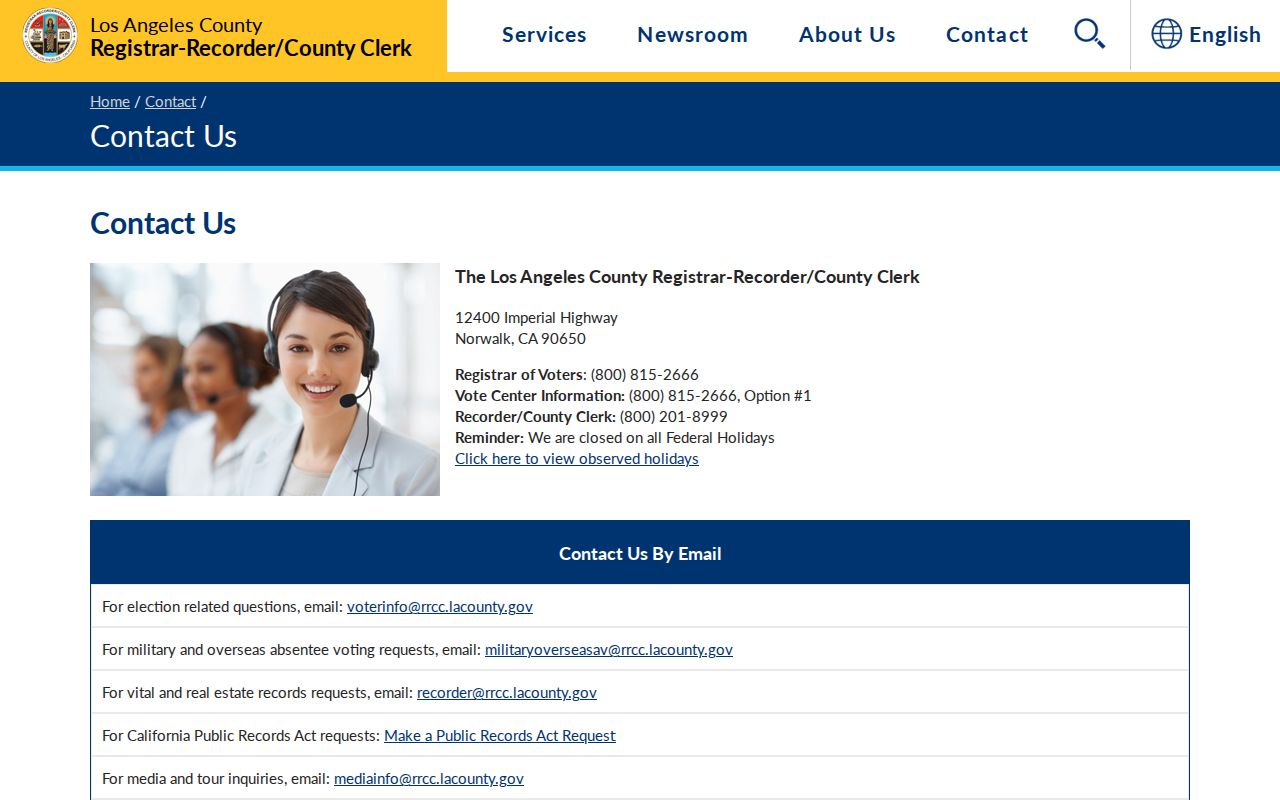
That contact route saves time. It sorts recorder, assessor, tax, and election questions so a request reaches the right custodian the first time instead of the wrong one.
California Voter Access Has a Purpose
California keeps voter access on a tight leash. The state's My Voter Status tool works only as a self-lookup. To use it, you supply your first name, last name, and date of birth. An identity check follows, tied to a California driver license, a state ID, or the last four digits of a Social Security number where the record holds that data. Once inside, a voter can view registration status, party preference, and polling information. District details, ballot status, and guide-delivery preferences appear as well. There is no way for a stranger to type in a name. They cannot browse a block.
The legal guardrails come from Elections Code section 2194 and 2 CCR sections 19001-19012. Those rules treat election, scholarly, journalistic, political, and governmental purposes differently. They stand apart from casual personal or commercial browsing. A qualified request for the full voter file must state an identified purpose. It must also give organization details, the requested geography and fields, security commitments, and payment. A specific-voter request can cover up to ten named people with identifying information. Even so, it is not an unnamed street list.
Myth check. A California voter roll is not an open Hawthorne neighbor directory. Use the authenticated self-lookup or a lawful qualified request, and never treat a registration record as proof of present occupancy.
For a voter's own authenticated record, use California My Voter Status. The county Registrar of Voters sits at 12400 Imperial Highway, Norwalk, and answers at (800) 815-2666, option 2.
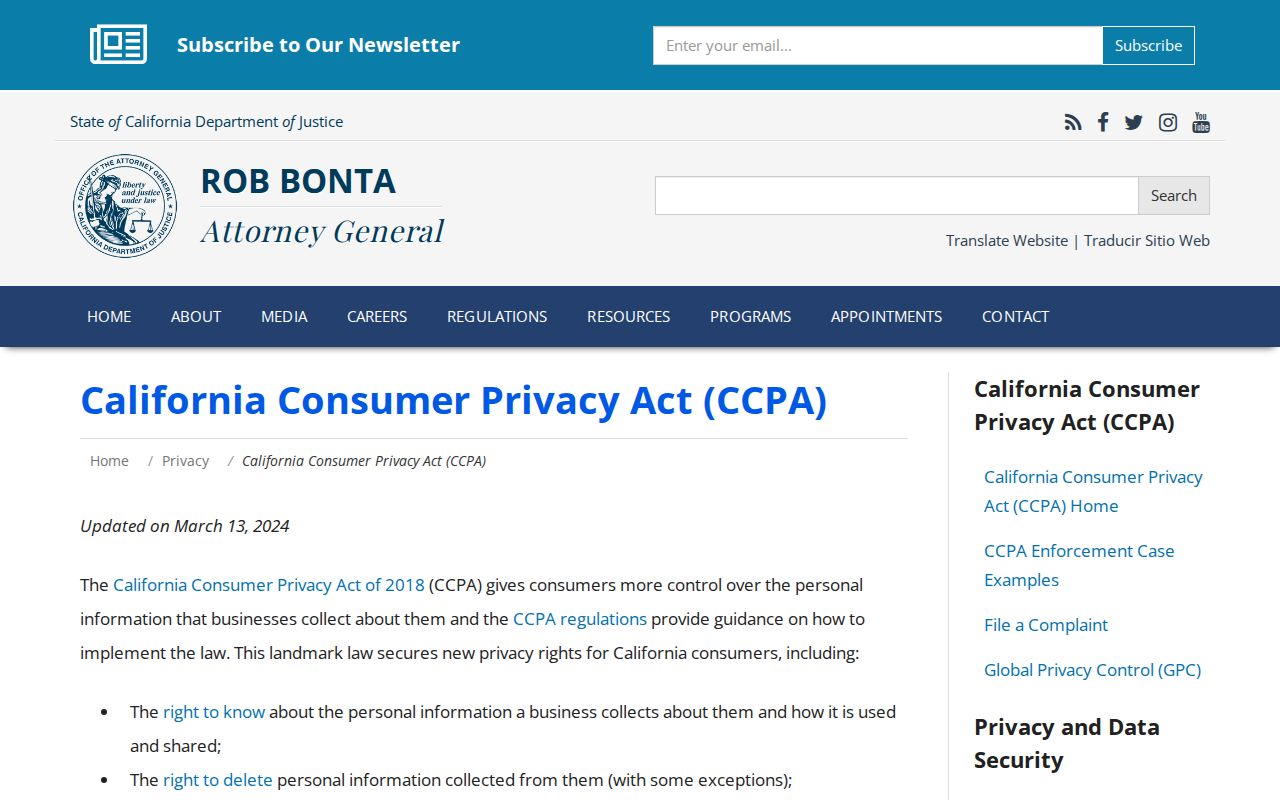
California privacy guidance draws a clear line between a public record and a free-standing list of private households.
Hawthorne Court and Probate Names
The Los Angeles Superior Court Find a Case page splits its doors. Case numbers, calendars, and document images sit beside civil or probate party searches and criminal defendant searches. Civil name fields accept a party last name or company. A first name helps when it narrows things. Criminal searches run on defendant last and first names. Exact Match and Starts With controls reward testing name variants. Still, any result needs a role, filing date, case type, and location check. Only then does it mean much.
Online coverage runs 1983-present for unlimited civil, family law, and probate. Limited civil starts in 1991, and small claims in 1992. Case-number and calendar routes can be free. Party-name searches cost a fee and stay visible for 24 hours. Document images have their own cutovers. Confidential, sealed, juvenile, adoption, paternity, and protected family material never opens online.
| Search field | Type | Use |
|---|---|---|
| Party last name or company | Text | Civil name discovery; Exact Match or Starts With |
| Party first name | Text | Narrows a personal-name match |
| Defendant last and first name | Text | Criminal defendant search |
| Case number | Text | Direct case summary and later review |
| Case type or service tile | Tab/button | Civil, family, probate, criminal, calendar, or images |
Probate is the practical heir trail for a Hawthorne property question. Staff can work from a full decedent name and date of death. A courthouse public terminal can then open a located case number. Petitions and notices may tie a former owner to the property. Distribution orders can do the same, within public-file limits. Open the official Los Angeles Superior Court case search before assuming a Hawthorne matter sits at the closest courthouse. Federal cases belong to the Central District of California and PACER instead.
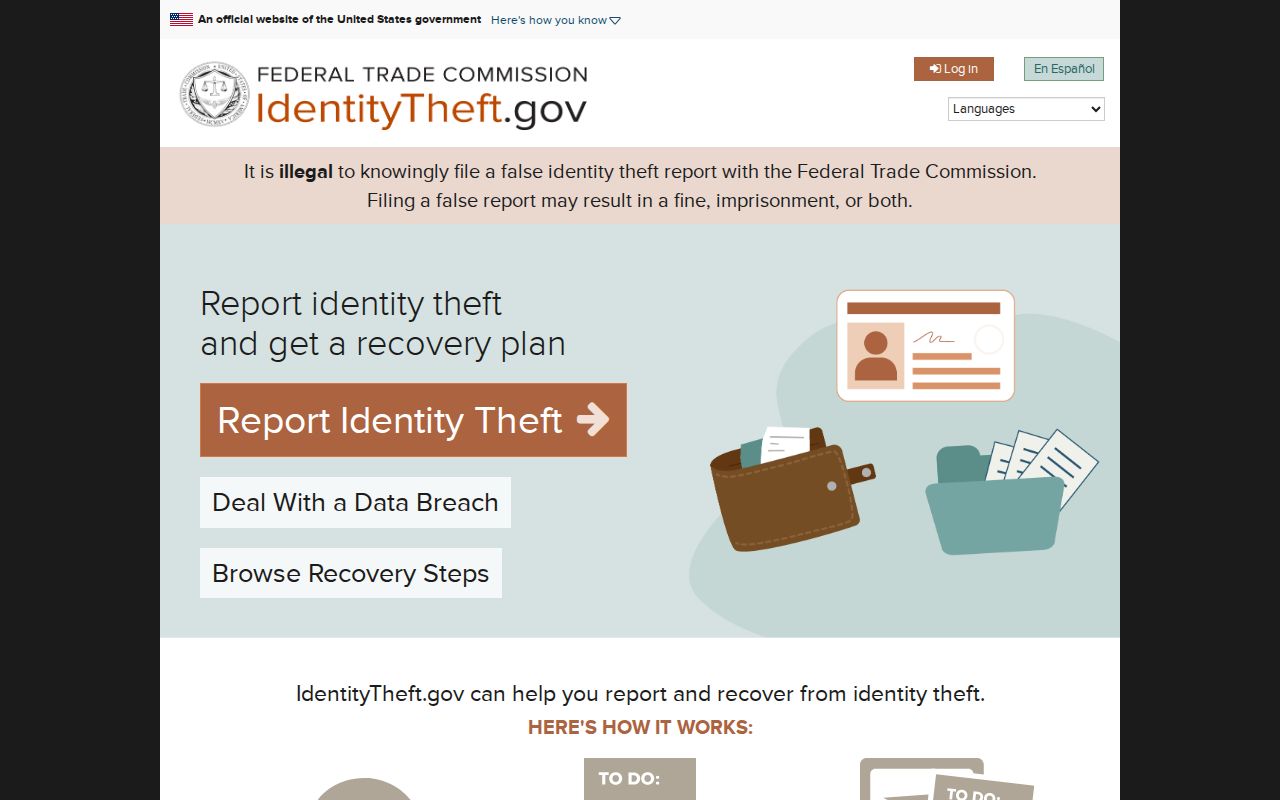
Identity-recovery resources live outside any court index and form no resident roster.
Vital Records Need the Right Eligibility
Birth, death, marriage, and dissolution records are certificates with access rules. They are not an open people index. Los Angeles County RR/CC handles county events. The California Department of Public Health provides statewide certified records. It also offers a limited dissolution certificate route. No universal California rule makes every birth record public after 100 years. Nor does it make every death record public after 50 years.
An authorized certified copy is limited by relationship or role. An informational birth or death copy reaches many requesters. But it is marked not valid to establish identity. Confidential marriage records go only to a party or by court order under Family Code section 511. Adoption files and original birth records demand specialized statutory or court procedures.
| Record | Local or state route | 2026 CDPH fee | Key limit |
|---|---|---|---|
| Birth | RR/CC or CDPH | $31 | Authorized versus informational copy |
| Death | RR/CC or CDPH | $26 | Requester treatment varies |
| Marriage | RR/CC or CDPH | $19 | Confidential marriage is narrower |
| Dissolution | LASC judgment or CDPH certificate for its period | $18 | Judgment comes from the court |
Expect application fields for the registrant or decedent's full name, the event date and place, parents or spouses, the requester's relationship, purpose, signature, and payment. Mail requests may need a sworn statement or notarization. The 2026 fee change follows AB 64, and specified diacritical marks may now appear on California vital certificates. Search exact names while preserving the spelling in the source. When the event or eligibility is statewide, start with California Vital Records applications.
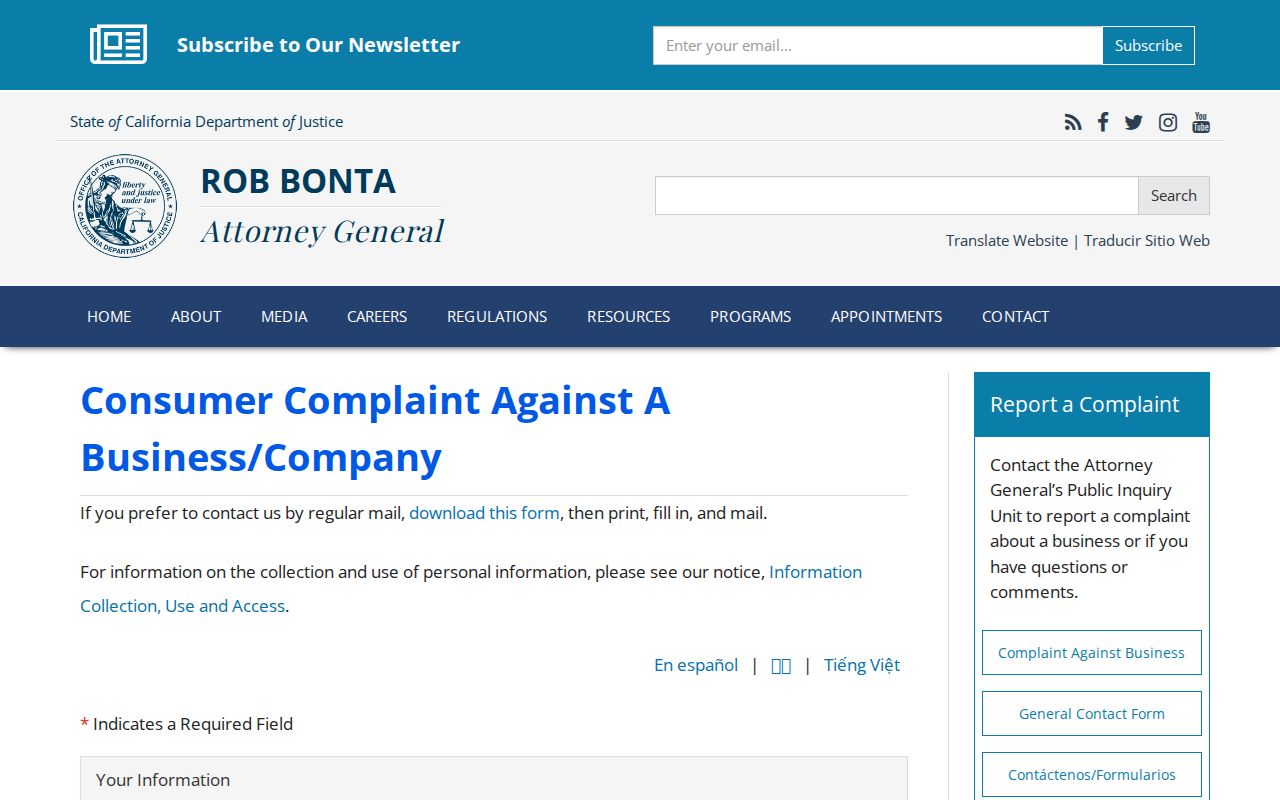
The California consumer complaint channel fits when a record is being misused. It does not replace the vital-record custodian, though.
Hawthorne City Requests Fill the Gaps
County portals rarely answer everything. City-created material often can. The Hawthorne clerk retains official documents, ordinances, resolutions, contracts, agreements, agendas, petitions, claims, lawsuits, notices, and other city records. Planning applications, permits, code cases, business-license material, police reports, and commission files may also name an applicant, owner, contractor, site address, or public participant.
Shape the request tightly: give a record description, date span, department, address or APN, and preferred delivery, and ask for electronic copies when available. The California Public Records Act does not require the city to create a new residents directory or answer a broad question. Within 10 calendar days the city generally decides whether responsive disclosable records exist, with a written extension of up to 14 additional days for unusual circumstances. Production can take longer, and inspection is ordinarily free.
- City Clerk
- 4455 W. 126th Street, Hawthorne, CA 90250; main (310) 349-2900; direct clerk line (310) 349-2915.
- Counter hours
- Monday through Thursday, 9:00-11:00 a.m. and 2:30-4:30 p.m.; City Hall is closed Friday.
- Email route
- Completed identifiable-record requests may be sent to cityclerk@cityofhawthorne.org.
- Useful description
- Include department, site address or parcel, date range, and whether inspection or copies are wanted.
Protected material stays protected. Complaints, investigative files, victim details, and similar exempt information may be withheld or redacted. A focused request for one permit or planning file is not the same as asking the clerk to compile everyone associated with Hawthorne. The Hawthorne City Clerk records page is the official starting point.
California public-record guidance lays out the request framework. The city itself decides what it holds and what an exemption protects.
Historical Hawthorne Resident Directories
Printed volumes carry the historical side of a Hawthorne residents directory. These range from city directories and telephone books to criss-cross volumes, census schedules, yearbooks, and newspapers. Local history collections matter too. LA County Library's Californiana Collection sits in closed stacks at Norwalk Library. It is deep. The official description counts more than 24,000 books and more than 200 newspaper and magazine titles. It also holds California census schedules from 1850 to 1910 and the Los Angeles Star from 1851 to 1879. Nineteenth-century city directories, county histories, and state documents fill out the rest.
No separate Hawthorne title appears in the official catalogs. Residents usually turn up elsewhere. They appear inside Los Angeles suburban, South Bay, Inglewood-Hawthorne, Polk, or Haines volumes instead. Test those catalog terms at the California State Library's California History Section. You can also try the Hawthorne Library reference desk. Formats differ. A reverse directory sorts by street and house number. An ordinary volume sorts by surname and may add a spouse, occupation, employer, address, or telephone.
A missing entry proves nothing. The reasons vary. A move, a death, non-subscriber status, a publication gap, a name variant, or an omitted unit can all explain it. Pair the year with the nearest census. Keep the volume's own abbreviation key. Use an obituary, probate file, deed, or school yearbook as a separate check. The deeper collection trail continues on the Hawthorne city directory collections page.
Scams are a separate problem. The federal fraud-reporting channel applies when a copied directory detail is being used in one.
Hawthorne Street Names Hide Old Matches
One Hawthorne address can wear several names across a century. The 1905 townsite is the anchor. Inglewood-Redondo Boulevard became Aviation Boulevard, and Ballona Street became El Segundo Boulevard around 1914. Hawthorne Avenue probably became Hawthorne Boulevard in the 1930s. Named east-west streets shifted to numbered streets between 1935 and 1938. Fifth, Sixth, and Seventh later became Ramona, Truro, and Eucalyptus between 1932 and 1935. Other ordinal streets changed in the 1960s.
The bridge across these shifts is the AIN, tract, lot, block, and legal description. Search both old and new street forms in newspapers, directories, court papers, and deed-related descriptions. Keep the Historical Society's hedging words. "Probably" and approximate ranges deserve to stay. A local chronology is not an exact date.
Address clue. A stable parcel identity can connect a renamed street, an old directory entry, and a later deed even when the written address changes.
The Hawthorne Historical Society street chronology holds the local evidence. A current postal label alone cannot resolve an older house.
Privacy and Lawful Directory Research
Public availability is not permission to build a private household dossier. California's Safe at Home program gives eligible survivors and certain reproductive-health participants a substitute address and mail-forwarding route. Protected voter records get extra treatment. So does specified officials' home information. Recorded documents can be corrected or redacted only through official processes, never by a casual request to a directory publisher.
Legitimate uses are broad. Genealogy, an heir question, a property-history project, civic transparency, and reconnecting through a lawful channel all qualify. Stalking, harassment, intimidation, and repeated unwanted contact never do. A compiled commercial tool can be stale or conflate people. It cannot override the custodian's limits or turn an inference into proof.
Misuse has consequences. California's Attorney General complaint and privacy resources, the Secretary of State, the county custodian, or law enforcement may be the right next contact. A focused records question, a clear role label, and a second source keep a Hawthorne residents directory search both accurate and less intrusive. Privacy rights can limit a broker copy. They cannot erase a deed or court file held under a separate disclosure law.